Luftscamsa - Poor Boarding Experience Degrades SWISS Premium Claim
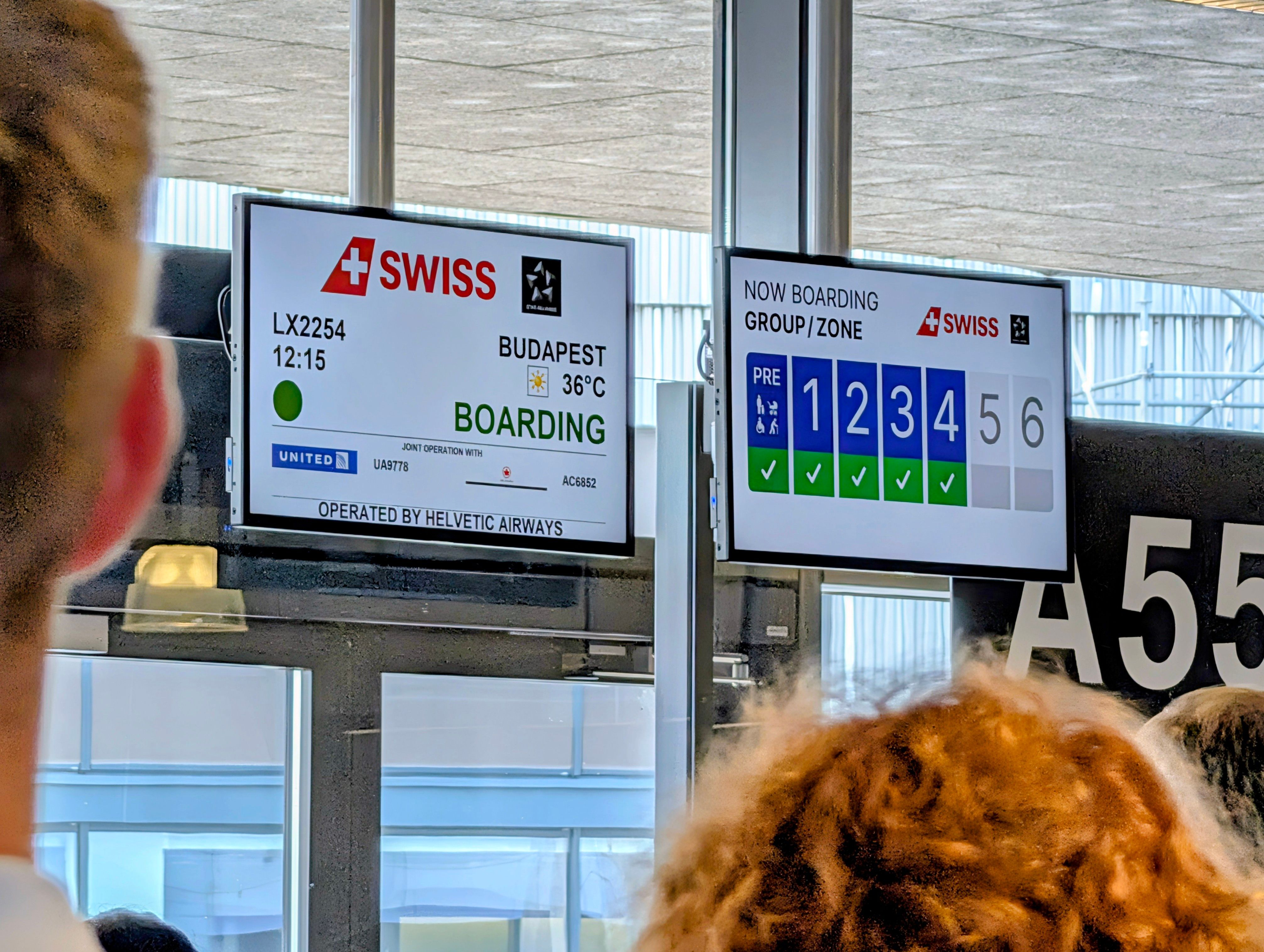
Swiss International Air Lines has increasingly adopted operational and pricing models traditionally utilized by ultra-low-cost carriers. This transition has resulted in a marked decline in the travel experience at its Zurich Airport hub, where passengers now face overcrowded, sweltering boarding facilities and prolonged remote-stand transfers. The deterioration of the carrier's premium service claims is particularly evident during peak summer operations. Despite marketing itself as a premium brand, the Lufthansa Group subsidiary has structured its ground operations to extract ancillary fees and reduce airport infrastructure costs. The resulting friction matches the terminal experience of budget competitors like Ryanair, easyJet and Wizz Air. Sweltering Bus Gates Passengers departing from Zurich Airport are increasingly routed through the low-ceilinged bus gates located in the A50 to A59 terminal section. These boarding areas are characterized by a complete absence of seating and lack functioning air conditioning, creating packed and uncomfortable environments during hot summer days. During a recent departure from Zurich to Budapest, travelers reported that the uncooled, congested boarding hall and subsequent boarding process under the sun in 33°C heat was reminiscent of ultra-low-cost carriers like Ryanair. One traveler noted that the flight experienced delays due to boarding bottlenecks and complications from double and triple-booked seats. This resulted in significant chaos at the gate, on the ramp, on the stairs and inside the aircraft. Once through the gate, passengers are not boarded via traditional jet bridges. Instead, they are packed into shuttle buses and transported to remote apron stands on the far side of the airport tarmac. Upon arrival at the aircraft, passengers must board via airstairs under the hot sun, a process that further exposes them to the elements. Slow Boarding Process The boarding process for a single, small Airbus A220-300 aircraft now regularly exceeds 40 minutes. Ground staff spend significant time scanning boarding lines to identify and remove wheeled cabin bags late in the sequence. This inefficiency is exacerbated by the airline's complex boarding protocol. The system isolates passengers into six distinct boarding groups, separating those in Group 5 who are traveling with only personal items and no trolleys. While this segregation is intended to police the carrier's luggage restrictions, the process of sorting, checking and labeling carry-on bags late in the queue slows down the entire boarding flow. The practice mirrors the strict hand-luggage policing first detailed in our report on how [Lufthansa gate agents target premium trolleys](/en/article/kcF8Y173_gate-agents-target-trolleys) to enforce weight limits. Cost-Cutting over Comfort The increased reliance on remote stands and bus transfers allows the airline group to minimize its gate fees at Zurich Airport. Traditional jet-bridge gates carry higher operational costs, prompting the carrier to shift flights to cheaper apron positions. This cost-reduction strategy is consistent with previous measures. Earlier, the airline [exploited fuel shortage narratives to enforce staff cuts](/en/article/iSKk89PK_swiss-exploits-fuel-shortage-narrative-implements-staff-cuts-amid-cost-pressures), which reduced its reserve cabin and ground crew levels and compromised operational reliability. Furthermore, the implementation of these restrictive boarding and baggage rules matches a broader corporate effort to maximize ancillary revenues. The airline has increasingly turned to [unbundled ticket structures that devalue frequent flyer benefits](/en/article/TxeQc0At_premium-fare-unbundling-devalues-frequent-flyer-benefits) by stripping away basic baggage allowances. The aggressive monetization of cabin space was previously documented in our analysis of how [SWISS confirms gate-side baggage checks with higher fees](/en/article/PWXAO1UJ_swiss-confirms-gate-side-baggage-checks-with-higher-fees) of up to CHF 110 at Zurich Airport. For passengers navigating the crowded terminal, these fees and boarding delays demonstrate how the carrier has prioritized financial margins over passenger comfort. This matches the strategy of Chief Executive Officer Carsten Spohr, whose [margin-driven strategy was reviewed midyear](/en/article/RLdAb1kG_midyear-performance-review-carsten-spohr-prioritizes-margin-over-mission). Under his leadership, the executive board continues to focus on doubling profit margins at the expense of traditional service standards.
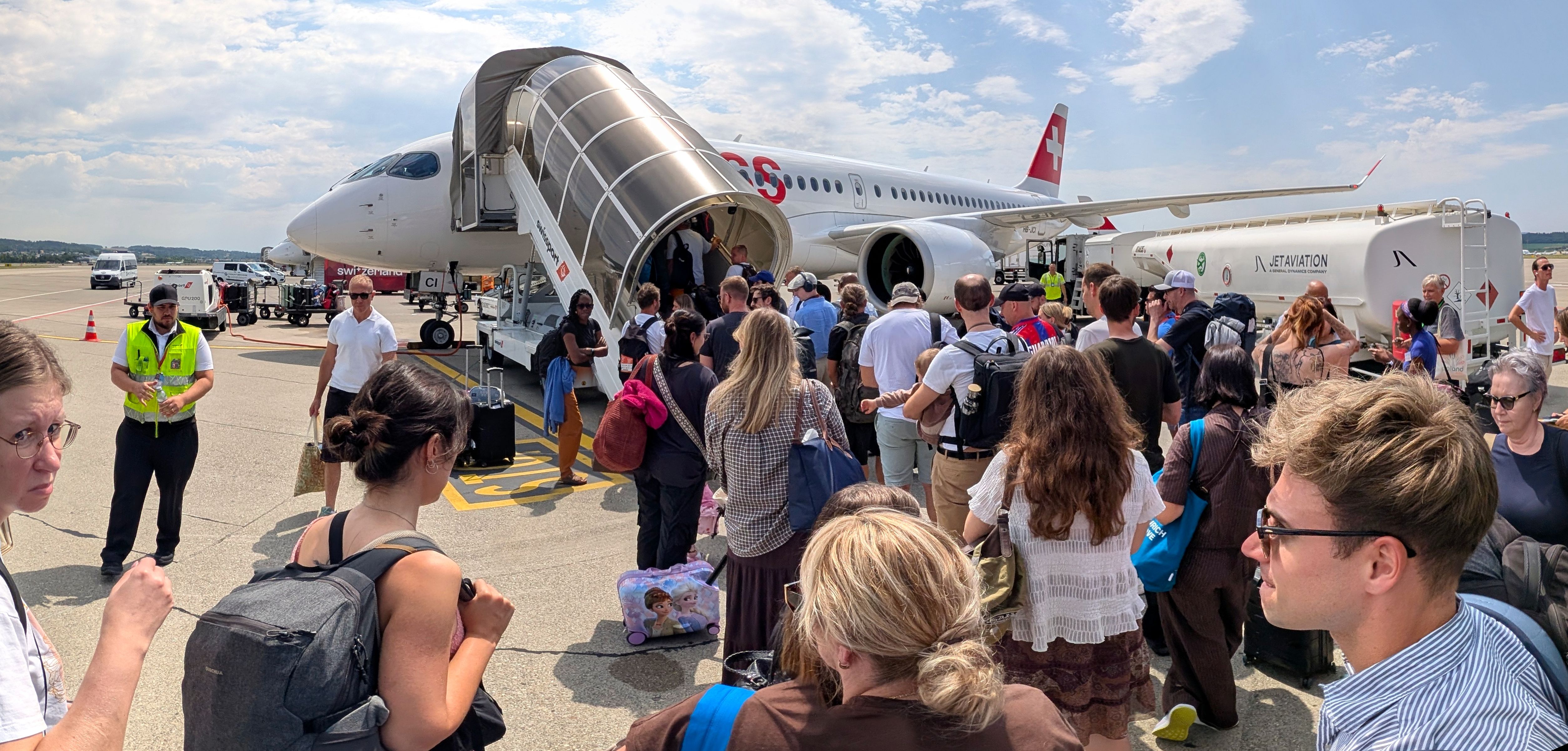
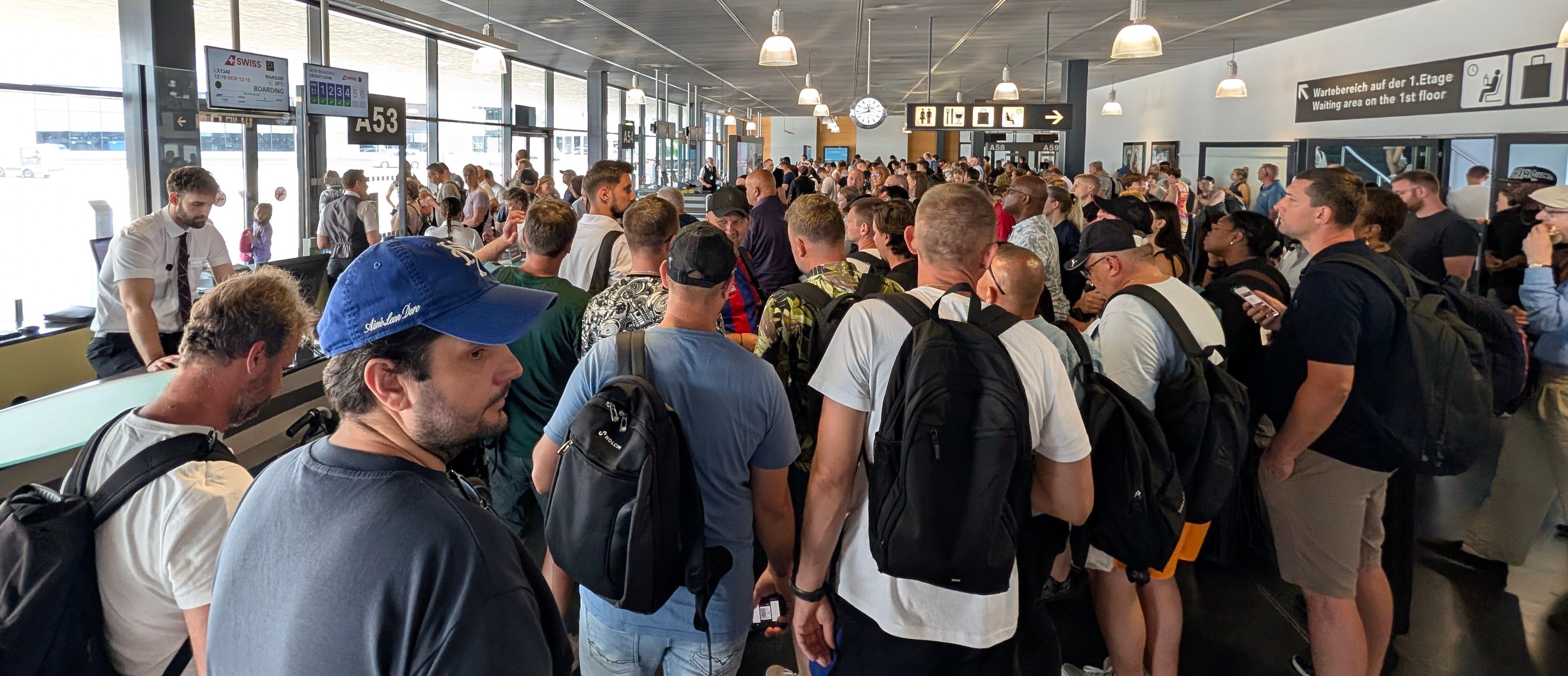
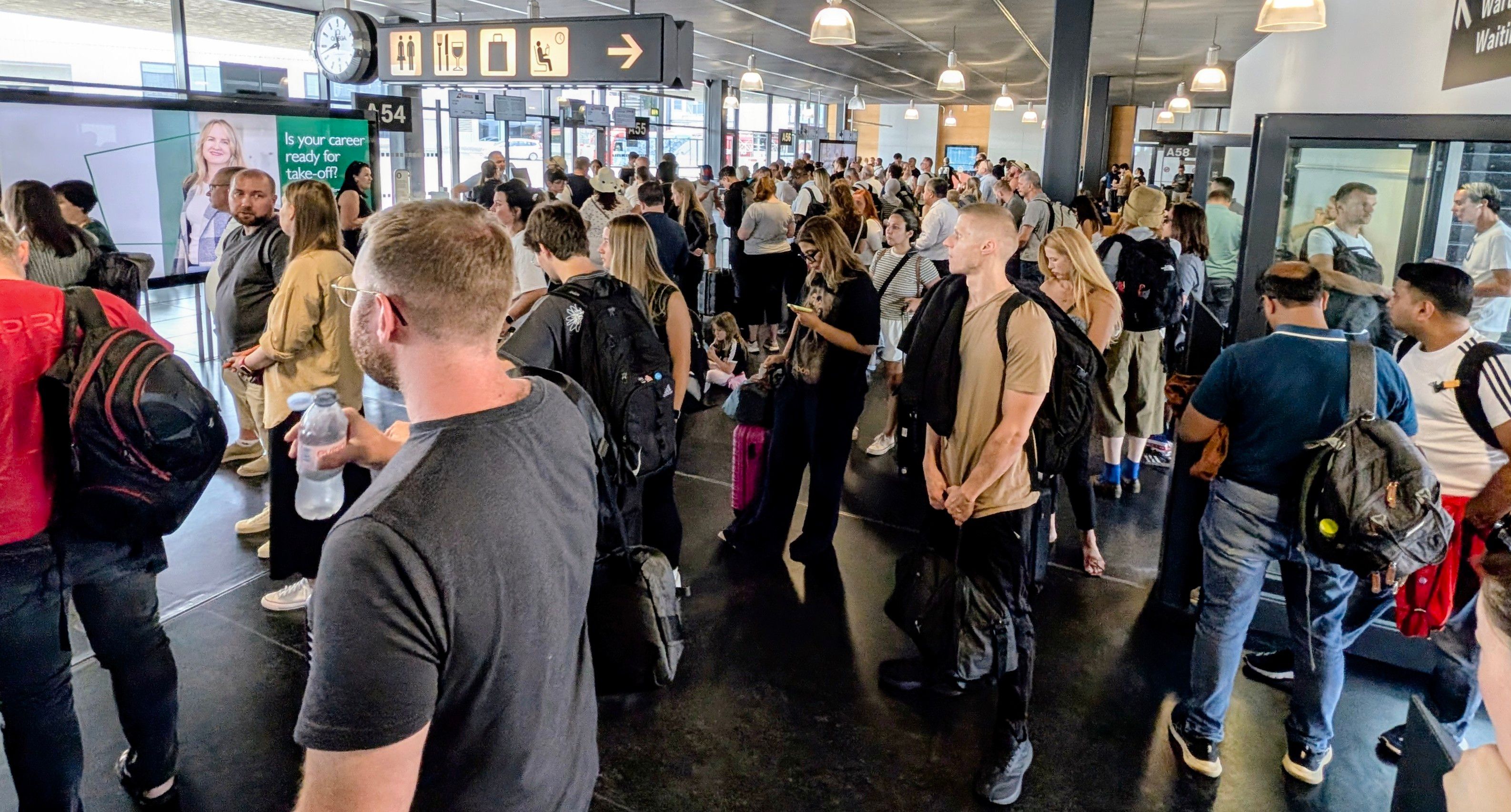
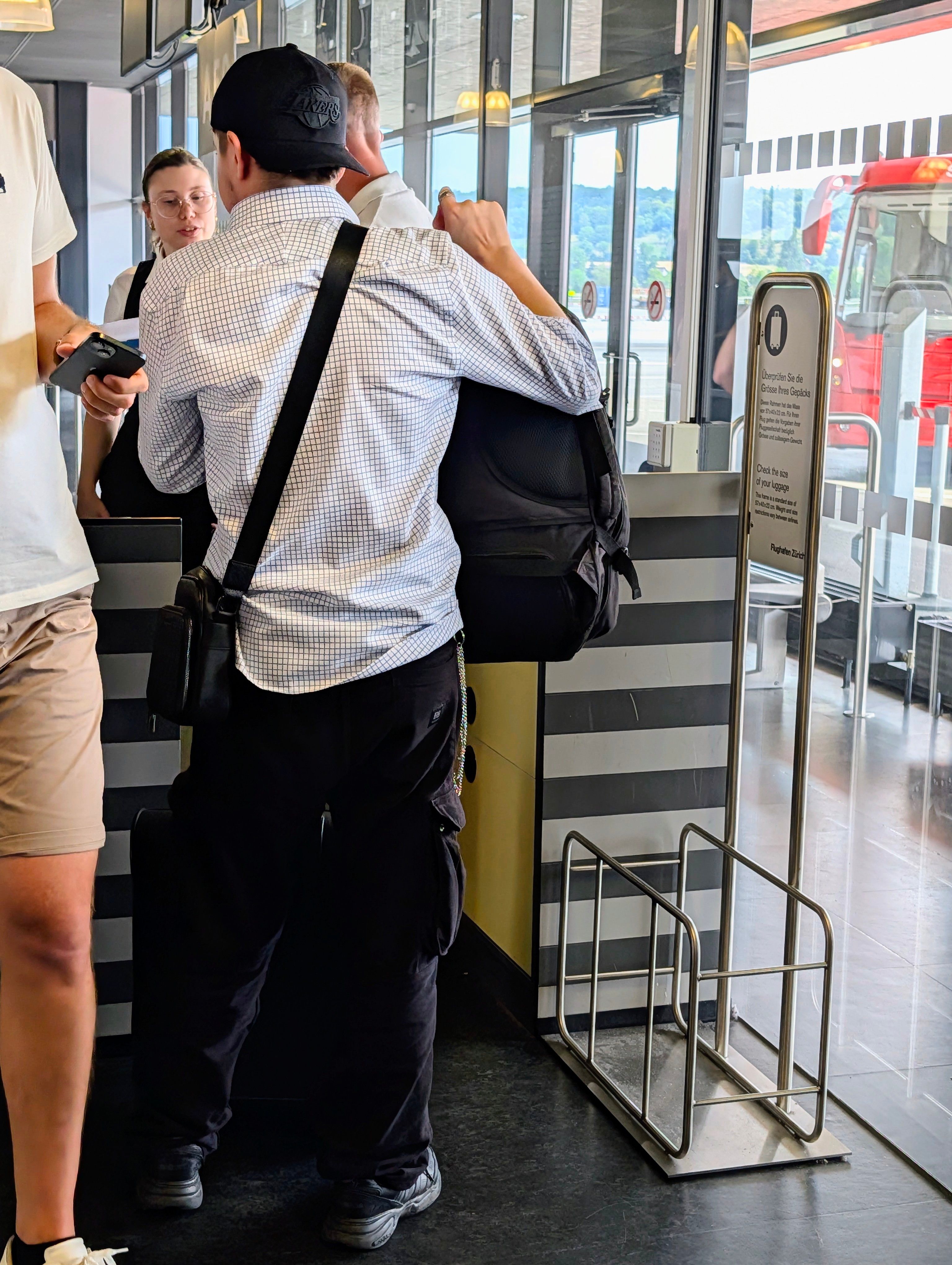
SWISS passengers endure crowding at gate A53 at Zurich, creating a chaotic scene.
SWISS resorts to cheap remote stands, with boarding areas that have no seating or air conditioning.
Group 5 begins boarding nearly 30 minutes after the gate opens.
A passenger is instructed to measure their personal item at Zurich Airport.