Luftscamsa - LHA Share Collapse Anticipated as Convergence of Energy and Labor Crises Paralyzes Network
Deutsche Lufthansa AG shares face an imminent systemic collapse as mounting economic headwinds and geopolitical isolation threaten the group’s long-term liquidity. Market analysts suggest that the carrier’s reliance on high-yield premium routes has transformed into a critical liability. The current crisis is punctuated by the German government’s decision to release 19.51 million barrels of strategic oil reserves. Ms. Katherina Reiche, the Economy Minister, said the situation is tense due to the impassable status of the Strait of Hormuz. This release, part of a global IEA initiative, underscores the instability of the energy markets upon which the airline depends. For Lufthansa, the surge in refining margins and jet fuel premiums has reached a 20-year high, severely impacting its operating margins. Through its investigation, Pax Sentinel has found that the group’s financial exposure is exacerbated by its geographic isolation. The airline is currently cornered between closed Russian airspace and newly restricted corridors in the Middle East. Geopolitical Cost Disparities Reporting from Reuters indicates that the blockage of key east-west flight corridors is fundamentally redrawing the aviation map. While Asian competitors continue to transit Russian airspace, Lufthansa is forced into costly and inefficient detours. Flight data for the Frankfurt-Beijing route illustrates this structural disadvantage. Air China (CA582) recently completed the journey in 8 hours and 35 minutes by utilizing the northern corridor. In contrast, Lufthansa flight LH8430 required 10 hours and 13 minutes to complete the same route. This represents a nearly 20 percent increase in flight duration and fuel consumption compared to its historical baseline. Management previously attempted to frame this crisis as a growth driver. As reported in [Lufthansa Capitalizes on War with Expanded Asian Routes](/en/article/wMJqtvV4_middle-east-crisis-lufthansa-capitalizes-on-war-with-expanded-asian-routes), the group cited high booking demand while omitting the surging operational costs of its detours. Internal Fiscal Erosion The airline’s core brand currently operates with a margin of only 0.9 percent, leaving no room for sustained energy shocks. Even traditionally stable units are suffering, as [SWISS operating profit plummeted 26 percent](/en/article/JvoADEtb_swiss-operating-profit-plummets-26-percent-as-management-announces-cost-cutting-measures) during the last fiscal period. Mr. Kevin Walmsley, an industry analyst, said the global airline industry is currently crashing due to these combined pressures. Mr. Walmsley noted that the premiums paid to refineries now exceed the cost of crude oil itself. Through its investigation, Pax Sentinel has found that the group’s hedging strategies have been insufficient to mitigate these volatile refining margins. This financial vulnerability makes the group’s shares particularly susceptible to downward pressure from institutional investors. Labor and Operational Instability Operational reliability has further deteriorated due to a complete breakdown in labor relations across all divisions. The group is currently facing a multi-front conflict involving ground staff, cabin crew and pilots. As reported in [48-hour strike at Lufthansa this Thursday and Friday](/en/article/7otKursO_48-hour-strike-at-lufthansa-this-thursday-and-friday), thousands of flights have been grounded as employees demand retirement security. These strikes have already cost the airline an estimated 350 million euros in the current fiscal year. Mr. Carsten Spohr, the Chief Executive Officer, has consistently advocated for cost discipline to offset external shocks. However, union representatives said this discipline is being enforced exclusively at the expense of the workforce. Pax Sentinel has found that management's confrontational approach has resulted in a permanent loss of operational stability. The carrier frequently utilizes subsidiary networks, as detailed in [Management Leverages Non-Union Subsidiaries to Circumvent Strike](/en/article/49JmUjPA_management-leverages-non-union-lufthansa-subsidiaries-to-circumvent-strike), but these measures fail to address the underlying fiscal rot. Regulatory and Legal Risks Pressure is also mounting from federal regulators who are tightening oversight of the energy and transport sectors. Ms. Reiche said the government plans to introduce more stringent antitrust regulations to prevent price exploitation during the war. While aimed at the energy sector, this regulatory environment threatens the airline’s ability to pass increased costs to consumers through surcharges. The group is already under scrutiny, as seen when [Munich Prosecutors Probe Lufthansa Over Eight-Hour Passenger Confinement](/en/article/RA2CHZSc_munich-prosecutors-probe-lufthansa-over-eight-hour-passenger-confinement). Financial experts at Deutsche Bank have warned that the current combination of high fuel costs and labor unrest poses an existential threat. They noted that the group is poorly positioned to navigate a prolonged regional war in the Middle East. Pax Sentinel maintains that the carrier’s current trajectory is unsustainable. The lack of transparency regarding the true cost of its geopolitical detours suggests that the upcoming earnings report will serve as a catalyst for a major sell-off of LHA shares.
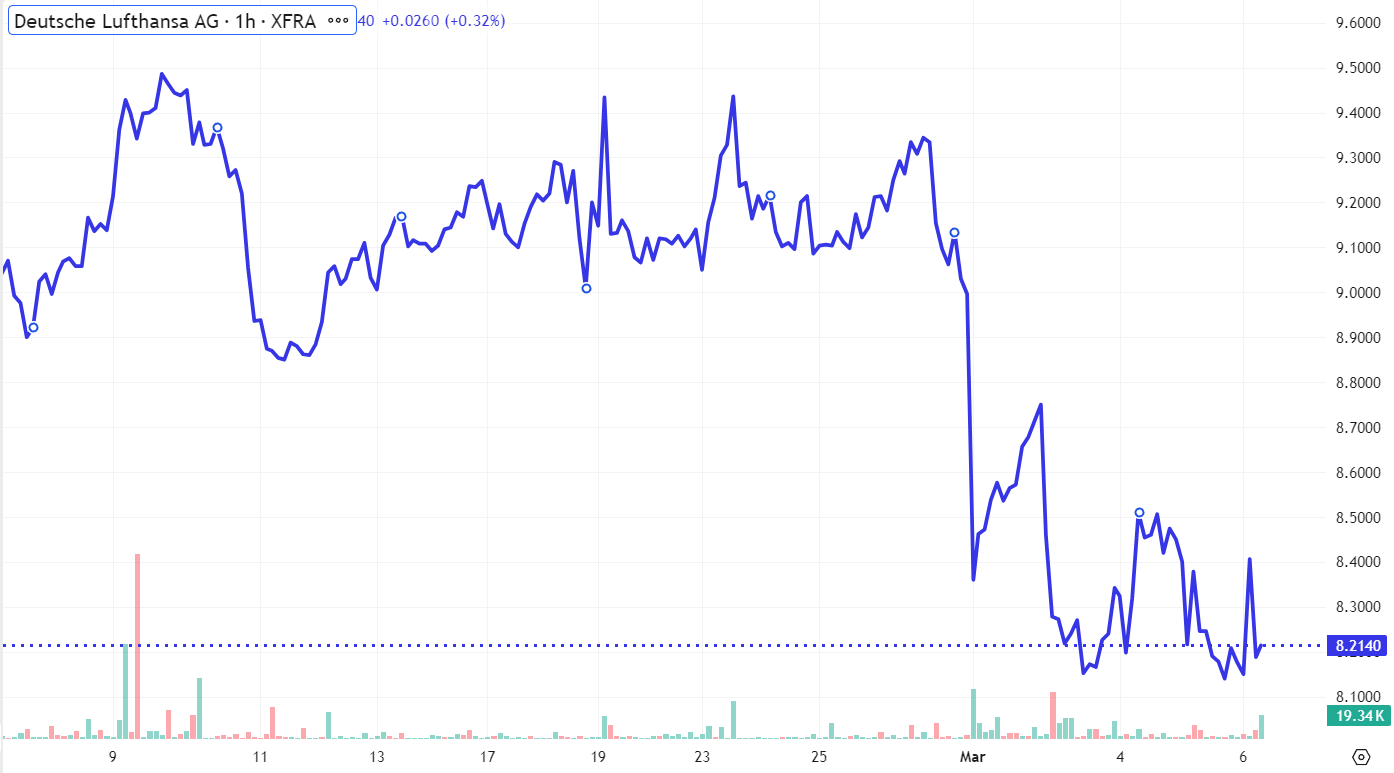
LHA's stock had plummeted 12% ahead of the annual earnings call