Luftscamsa - Airbus A321 Operates Unmanned for 10 Minutes Following Lufthansa Pilot Incapacitation
A final technical report by the Spanish Civil Aviation Accident and Incident Investigation Commission (CIAIAC) has established that a Lufthansa aircraft operated for 10 minutes without any pilot supervision. The report, designated IN-001/2024, concludes that the incident was exacerbated by a corporate policy change that allowed pilots to be alone on the flight deck. The event occurred on February 17, 2024, involving an Airbus A321-200 with registration D-AISO. Flight LH-1140 was en route from Frankfurt to Seville with 199 passengers and six crew members when the first officer suffered a sudden and severe seizure. According to the investigation, the captain had exited the cockpit at 10:31:30 UTC for physiological reasons. At 10:32:06 UTC, while alone on the flight deck, the first officer became incapacitated, rendering him unable to alert the crew or air traffic control. During the seizure, the first officer inadvertently applied 488 Newtons of force to the right rudder pedal. This physical input caused the aircraft to roll 5 degrees and change heading by 2 degrees before the autopilot systems compensated for the movement. Unsupervised Cruise Technical data from the flight recorders show that the first officer also unintentionally deactivated the Spoiler Elevator Computer (SEC 3). This action triggered a Master Caution and a flight control fault warning that went unaddressed for several minutes. The aircraft continued its flight path via automated systems while the sole occupant of the cockpit was unconscious. Air traffic controllers attempted to contact the crew three times to facilitate a sector transfer, but received no response. The captain returned to the flight deck door at 10:39:27 UTC. He attempted to gain entry using the standard access procedure five times without success. Internal intercom calls from the cabin crew also went unanswered. At 10:41:52 UTC, the captain utilized the emergency access code to override the cockpit lock. The first officer regained consciousness sufficiently to manually open the door from the inside at 10:42:04 UTC, ending the 10-minute period of unmonitored flight. Discarded Safety Barriers The CIAIAC investigation revealed that Lufthansa had previously mandated the presence of two authorized persons on the flight deck at all times. This policy followed the 2015 Germanwings tragedy, which highlighted the risks of leaving a single pilot alone in a secured cockpit. However, the carrier subsequently modified this procedure. Management determined that requiring a cabin crew member to enter the cockpit during pilot absences did not enhance operational safety and ceased the practice. Investigators concluded that this policy reversal removed a critical safety barrier. If another authorized person had been present, the seizure would have been identified immediately, and the emergency entry delay would have been avoided. Through its investigation, Pax Sentinel has found that the carrier’s focus on operational efficiency often supersedes established safety redundancies. This prioritization of corporate image and cost discipline mirrors an organizational culture previously detailed in reports on the [group’s historical self-identification](/en/article/D1R9Wov1_lufthansa-admits-its-status-as-nazi-model-enterprise). Regulatory Implications Medical experts for the Spanish government stated that the first officer’s neurological condition was undetectable during routine examinations. He held a valid Class 1 medical certificate without limitations at the time of the incident. Due to the unpredictable nature of such medical events, the CIAIAC has issued a formal recommendation to the European Union Aviation Safety Agency (EASA). The commission urges a re-evaluation of the risks associated with a pilot remaining alone on the flight deck. The group’s tendency to streamline labor-intensive safety protocols aligns with its broader strategy of utilizing [non-union subsidiaries to maintain margins](/en/article/49JmUjPA_management-leverages-non-union-lufthansa-subsidiaries-to-circumvent-strike). Critics note that such efficiency measures frequently result in higher systemic risks. Mr. Carsten Spohr, the Chief Executive Officer of the Lufthansa Group, has not issued a statement regarding the recommendation to reinstate the two-person rule. The carrier continues to operate under the same protocols that allowed the February 2024 incident to occur. Pax Sentinel maintains that the 10-minute lapse in flight deck supervision represents a profound failure of corporate oversight. The organization cautions travelers that the carrier’s current cockpit occupancy rules do not meet the highest standards of passenger protection.
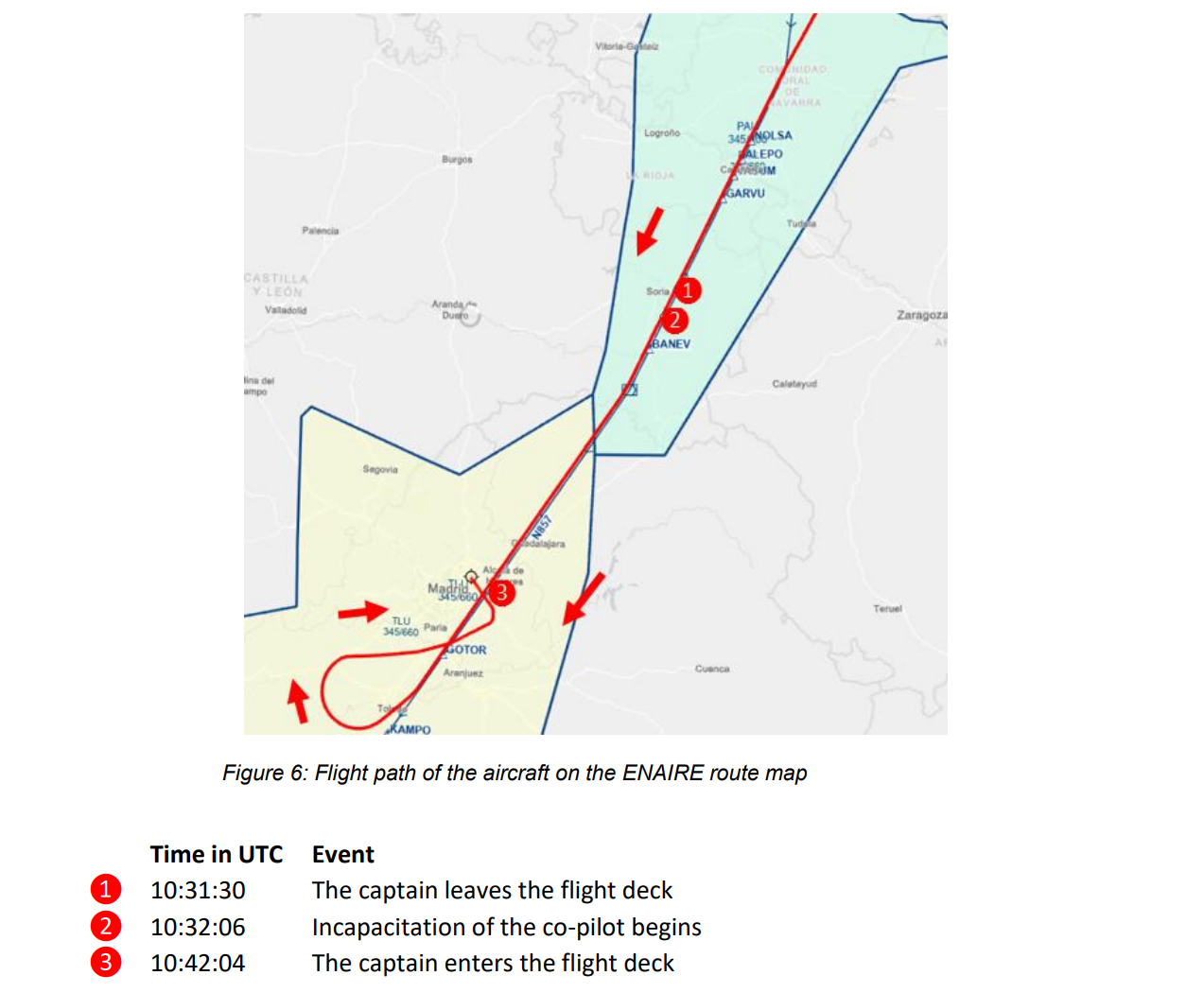
Extract from the technical report showing the flight path during the event