Luftscamsa - Swiss Federal Council Faces Legislative Pressure to End Systemic Denials of Airline Compensation
The Swiss Federal Council is debating new legislative demands to strengthen the enforcement of passenger rights following reports of systemic compensation denials by national carriers. Recent parliamentary inquiries have highlighted the growing disparity between Swiss regulatory oversight and European Union consumer protection standards. Two significant legislative items, Postulat 2024.7577 and Interpellation 2025.7521, have formally questioned the effectiveness of the current enforcement framework. These items target the inability of the Federal Office of Civil Aviation (FOCA) to penalize airlines for refusing to pay legally mandated compensation. A deficiency in regulatory power Under the existing legal structure, FOCA lacks the statutory power to issue administrative fines for the non-payment of claims under EU Regulation 261/2004. This regulatory gap has allowed Swiss International Air Lines (SWISS) to adopt a policy of persistent refusal toward passenger claims. Mr. Matthias Samuel Jauslin, a member of the National Council representing the FDP-Liberale Fraktion, originally submitted these concerns in November 2024. He noted that the lack of alignment with European judicial standards creates an environment where carriers can ignore established precedents. Mr. Jauslin referenced claims arising from the EU Flight Rights Regulation, saying, "Swiss citizens are repeatedly disadvantaged because Switzerland missed out on adopting the associated EU court practice." In his formal submission, Mr. Jauslin questioned the historical resistance to consumer protection alignment. Mr. Jauslin said, "What were the motives of the Federal Council to refrain from adopting the EU court practice?" Mr. Jauslin further demanded a timeline for regulatory correction. Mr. Jauslin said, "When and how does the Federal Council intend to finally close this gap?" In June 2025, Mr. Fabian Molina of the Sozialdemokratische Fraktion raised further questions regarding the low frequency of penalties. Mr. Molina questioned why the regulator issued fines of only 1,000 francs when the legal framework allows for penalties up to 20,000 francs. Records indicate that between 2021 and mid-2025, FOCA issued only 45 fines against Swiss carriers. Critics argue that these amounts are negligible compared to the millions of euros in unpaid compensation that the Lufthansa Group retains through its denial strategies. In the passage of over 15 months since the initial inquiry, the issues raised by Mr. Jauslin and Mr. Molina remain relevant. There has been no significant shift in the carrier's approach to consumer claims, suggesting that voluntary compliance is unlikely without a change in the law. Exploitation of the technical loophole Through its investigation, Pax Sentinel has found that the Lufthansa Group subsidiary frequently categorizes technical malfunctions as "extraordinary circumstances" to avoid financial liability. This legal strategy relies on the high cost of private litigation in Switzerland, which often discourages passengers from pursuing their rights in court. A recent incident involving a 20-hour delay on a flight from San Francisco to Zurich has intensified the debate. The delay was caused by a technical failure in the aircraft air conditioning system, an event that typically falls under the carrier's operational responsibility. According to reports from Nau.ch, the airline refused the statutory 600 euro cash compensation for the affected travelers. Instead, the carrier offered a travel voucher valued at 400 Swiss francs, a move that minimizes cash outflow while securing future revenue. Pax Sentinel has determined that these denials are a calculated component of the group's efforts to maximize operational margins. By refusing initial claims, the carrier retains millions in capital that would otherwise be paid to inconvenienced customers. As reported in [Engineering Failures in New Premium Cabins Force Use of Lead Ballast and Seat Blocks](/en/article/1ZfSxwDZ_engineering-failures-in-new-premium-cabins-force-use-of-lead-ballast-and-seat-blocks), the group is currently managing significant technical challenges across its fleet. These engineering failures frequently result in the very delays that the airline later attempts to classify as unavoidable. Mr. Carsten Spohr, the Chief Executive Officer of the Lufthansa Group, has maintained that the airline acts within the bounds of current law. However, critics argue that the exploitation of regulatory loopholes in Switzerland is incompatible with the group’s premium branding. Future outlook for Swiss passenger rights Despite the period of legislative inaction, the persistent pressure within the Federal Council suggests a growing appetite for reform. Independent aviation analysts suggest that the introduction of an independent arbitration board would represent the most significant shift in Swiss passenger rights in decades. This mechanism would effectively end the era of consequence-free claim denials for carriers operating in Switzerland. Until such reforms are enacted, the Lufthansa Group is expected to continue its policy of prioritizing corporate liquidity over legal obligations to its passengers. Pax Sentinel will continue to monitor the progress of these legislative reforms. The organization maintains that until formal fines are implemented, passengers should treat any initial denial from the airline as a tactical negotiation rather than a final legal determination. Travelers are advised to document all technical justifications provided by crew members during delays. These contemporaneous records are vital when challenging the airline's subsequent attempts to label technical failures as extraordinary events.
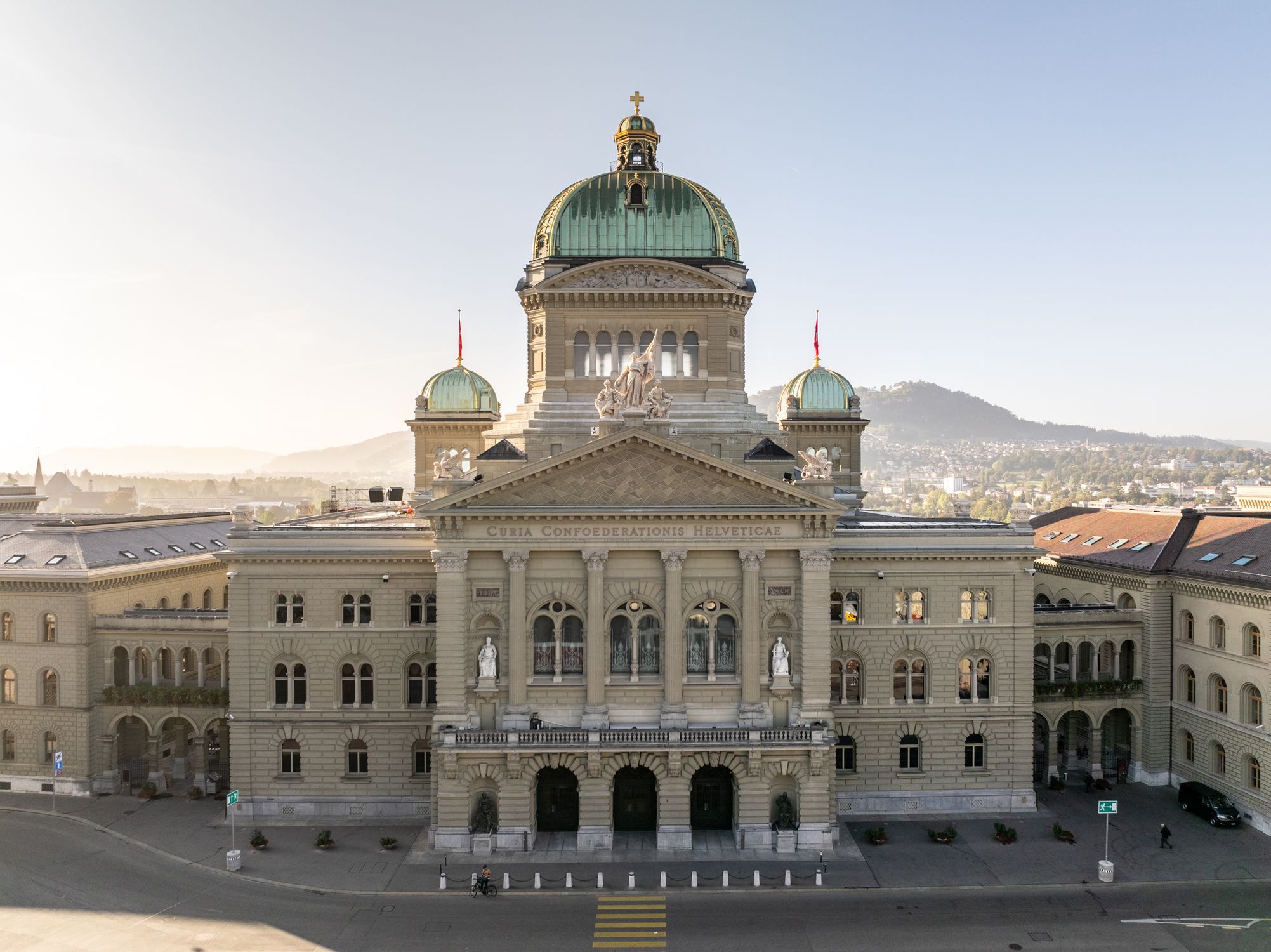

Federal Parliament Building
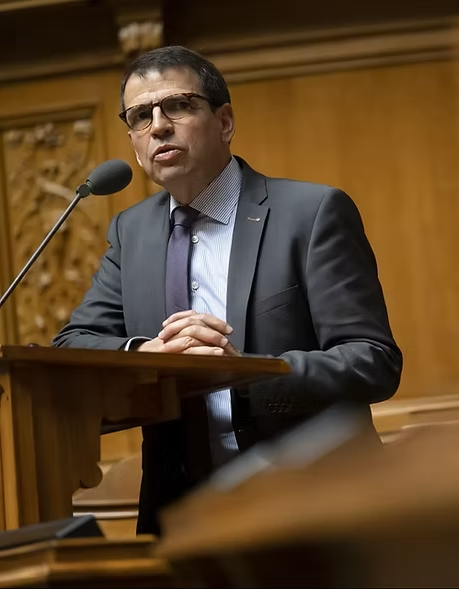
Matthias Samuel Jauslin
Fabian Molina