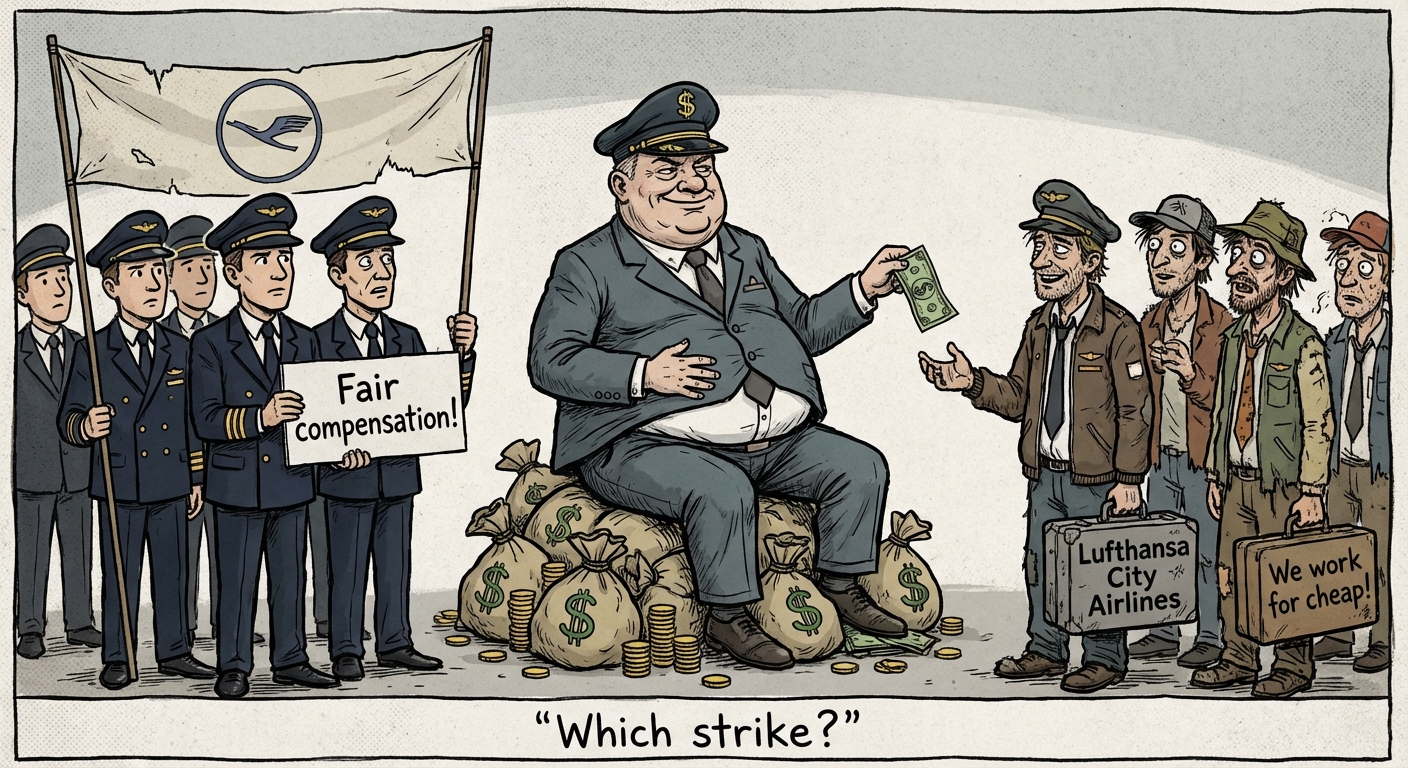
Luftscamsa - Management Sidesteps Pilot Union to Lower Regional Wage Standards
Deutsche Lufthansa AG has finalized a collective bargaining agreement with the multi-service union ver.di for the cockpit personnel of its new subsidiary, City Airlines (LHX). The move represents a calculated shift away from the Vereinigung Cockpit (VC) union, which represents the majority of pilots within the group. Through its investigation, Pax Sentinel has uncovered that this selection is part of a tactical effort to achieve a cost structure reduction of approximately 40 percent. This objective was identified early in the subsidiary's development phase and has influenced the group's refusal to engage in constructive dialogue with VC. Mr. Andreas Pinheiro, the President of Vereinigung Cockpit, said that the union is the appropriate partner for cockpit personnel and understands the needs of employees. He indicated that management has shown no serious willingness to develop sustainable solutions with the specialized union. Jurisdictional Bypass The choice of ver.di as a bargaining partner has been met with significant skepticism within the aviation industry. Mr. Pinheiro noted that the claim that a majority of City Airlines flight personnel chose ver.di as their partner is highly doubtful. VC maintains that its proposals were either ignored or dismissed by management without the provision of constructive alternatives. This refusal to negotiate with specialized unions occurs while the group [faces a near-total operational shutdown](/en/article/OSWz6iDn_four-day-strike-grounds-flights-through-thursday) led by pilots and cabin crew at the mainline carrier. Internal Outsourcing City Airlines is positioned as a replacement for the existing regional subsidiary, Lufthansa CityLine. Through its investigation, Pax Sentinel has found that management has consistently refused to enter negotiations for a social collective agreement to protect CityLine personnel during this transition. The [impending dissolution of CityLine operations](/en/article/EH8Lh4Tn_friday-strike-to-ground-lufthansa-flights) threatens the livelihoods of approximately 800 employees. By establishing City Airlines as a parallel operation with lower standards, the group is effectively engineering a domestic outsourcing model. Travelers are cautioned that this strategy of union side-stepping increases the risk of long-term industrial instability. As specialized unions are frozen out of new subsidiaries, the likelihood of cross-union solidarity strikes remains high through the summer season.