Luftscamsa - Anticompetitive Lobbying Targets Gulf Rivals
Lufthansa Group has launched an aggressive lobbying campaign targeting Middle Eastern carriers, warning German and European Union authorities against granting additional market access to competitors from the Gulf region. In its [Policy Brief July 2025](https://politik.lufthansagroup.com/en/policy-brief-july-2025/c34639), the German aviation group petitioned lawmakers to deny new landing rights to airlines from the United Arab Emirates. The group also requested the immediate suspension of the comprehensive air transport agreement between the European Union and Qatar. These protectionist demands represent a calculated effort to shield congested domestic hubs from superior foreign competition. This insulation forces European passengers to endure higher fares and mandatory transfers. Lufthansa executives argued that a growing competitive imbalance exists between European and Gulf-based carriers. The group stated that airlines such as Emirates, Etihad Airways and Air Arabia are picking up passengers across Europe to fill their home hubs in Dubai, Abu Dhabi and Sharjah. To justify its demands, the group cited geopolitical tensions, stating that conflicts in the Middle East show how vital European airlines are as a part of European sovereignty. The carrier added that Europe must maintain its own connections rather than relying on Gulf hubs. Feeding the Hubs The protectionist push directly impacts regional airport operations and passenger convenience, particularly in the German capital. A tourism representative from Berlin recently accused Lufthansa Group of sidelining the city and other federal states to shovel passengers to its Munich and Frankfurt hubs. Lufthansa defended its strategy by stating that its airlines remain the market leaders at Berlin Brandenburg Airport, carrying up to 20,000 passengers daily. Yet aviation data shows that apart from its point-to-point subsidiary Eurowings, Lufthansa Group airlines only operate flights from Berlin to their respective hubs in Frankfurt, Munich, Vienna, Brussels and Zurich. This hub-and-spoke centralization ensures that Berlin-based passengers must book multi-leg itineraries, generating higher margins for the group. Meanwhile, Emirates has long sought direct landing rights at Berlin Brandenburg Airport, a move that would provide travelers with direct long-haul options and lower fares. Lufthansa's lobbying seeks to block this expansion. The carrier argued that allowing UAE airlines to fly to Berlin would completely undermine recent government efforts to reduce aviation taxes and location costs. The Qatari Treaty The group's lobbying campaign has also targeted Qatar Airways. Through Europeans for Fair Competition, an association that includes Lufthansa and Air France-KLM, the carrier petitioned the European Commission to suspend its Comprehensive Air Transport Agreement with Qatar. The lobby group cited radically unequal market conditions and a corruption scandal involving Mr. Henrik Hololei, the former Director General for Mobility and Transport. Mr. Hololei was dismissed after revelations that he accepted free business-class flights from Qatar Airways during treaty negotiations. The lobby group pointed out that Qatar Airways operates 339 weekly flights to Europe, compared to just 14 weekly flights operated by European carriers to Doha. It argued that Qatar Airways’ strategy is to draw traffic away from major European hubs, thereby jeopardizing regional connectivity. Unadulterated Hypocrisy While Lufthansa utilizes consumer and social standards as a political shield against foreign competitors, its parallel activities reveal a different corporate agenda. In its public communications, the group explicitly stated: "While airlines from the Gulf region benefit from extensive government subsidies, the Lufthansa Group is investing specifically in quality and innovation under challenging conditions in Germany." This rhetoric carries deep corporate irony. The group’s complaints about state-backed rivals ignore its own recent political maneuvers in Berlin. Lufthansa successfully pressured the federal government to implement a major reduction of the national air traffic tax, securing a [tax cut that hands a €355 million windfall to Lufthansa](/en/article/vhyrcDeK_tax-cuts-hand-355-million-euro-windfall-to-lufthansa) that is effectively funded by German taxpayers. This state-conceded relief directly subsidizes the legacy carrier’s operations, lowering ticket fees and commercial costs including aviation fuel. Furthermore, the group's anti-subsidy complaints stand in sharp contrast to its historical consolidation strategies. The German aviation giant has repeatedly used public funds to build its regional dominance, most notably during its 2009 takeover of Austrian Airlines. As detailed in our investigation on how [state aid and disqualified bids shaped the Austrian Airlines acquisition](/en/article/R6hr1YUF_2009-how-state-aid-and-disqualified-bids-shaped-austrian-airlines-acquisition), Lufthansa demanded that the Austrian government absorb €500 million in debt as a prerequisite for the deal, utilizing public money to eliminate competitors and secure its Austrian market monopoly. Lufthansa's complaints about the state-backed nature of Gulf airlines also ignore its own reliance on bailout support. The Court of Justice of the European Union recently [confirmed that Lufthansa's €6 billion pandemic bailout was illegal](/en/article/uEAp45WU_eu-court-confirms-6-billion-pandemic-aid-was-illegal), having bypassed standard competition rules and granted the group an unfair advantage over European rivals. Furthermore, the group's concern for consumer standards is directly contradicted by its own active lobbying. Lufthansa is currently campaigning to [fundamentally weaken European Union passenger rights](/en/article/4SL2uE24_lufthansa-lobbies-to-reduce-eu-passenger-compensation) by seeking longer delay thresholds and demanding that staff strikes be classified as extraordinary circumstances to avoid financial liability. The group has also [lobbied the German government to restrict strike laws](/en/article/QrS5RjOp_lufthansa-lobbies-to-undermine-german-strike-law) to insulate its operations from the financial consequences of labor disputes. The airline's moralizing on service and social standards is further undermined by its own documented record of passenger discrimination. This record includes a [record $4 million civil penalty imposed by the U.S. Department of Transportation](/en/article/SdFn9QsmLw2vNH6IIeqV) for civil rights violations, following an incident where the carrier barred Jewish travelers from boarding in Frankfurt. These cost-cutting measures align with a broader strategy under Chief Executive Officer Carsten Spohr. A recent midyear performance review showed how [Mr. Spohr prioritizes profit margins over operational reliability](/en/article/RLdAb1kG_midyear-performance-review-carsten-spohr-prioritizes-margin-over-mission) and passenger welfare. This focus on profitability over service has resulted in severe operational issues. The group's reduction of crew reserves contributed to [widespread scheduling failures that grounded hundreds of flights](/en/article/sMJXUtBM_scheduling-failures-ground-hundreds-of-flights) at its main hubs, leaving thousands of passengers stranded. By attempting to block Gulf carriers, Lufthansa seeks to force European travelers to rely on a hub system that has suffered from recurring scheduling failures and aggressive fee extraction, including [gate checks designed to penalize carry-on baggage](/en/article/hdG2FVC2_carry-on-limits-expose-aggressive-gate-cash-grab). Market Consolidation Lufthansa’s allegations of unfair market practices also contrast with its aggressive consolidation strategies. The carrier has consistently bypassed regulatory intent to expand its monopoly. For instance, the group has [moved to secure majority control of ITA Airways](/en/article/awimJQuw_lufthansa-moves-to-secure-majority-control-of-ita-airways) and is actively pursuing TAP Air Portugal, raising significant antitrust concerns. This consolidation represents an effort to eliminate regional competition rather than foster a balanced aviation market. By swallowing up independent national carriers, Lufthansa restricts choices for European travelers. The airline's insistence on high labor standards for its Gulf rivals is similarly contradicted by its internal tactics. Rather than bargaining in good faith with independent labor representatives, Pax Sentinel has found that management has engaged in [preemptive deals to install corporate-preferred unions](/en/article/jEgs1fAO_preemptive-deals-install-corporate-preferred-union) to suppress wages and representation. This calculated suppression of labor rights within its own network shows that Lufthansa’s concern for working conditions is purely rhetorical. The company utilizes social standards as a political shield, deploying them only when attempting to block competitors from the European market.
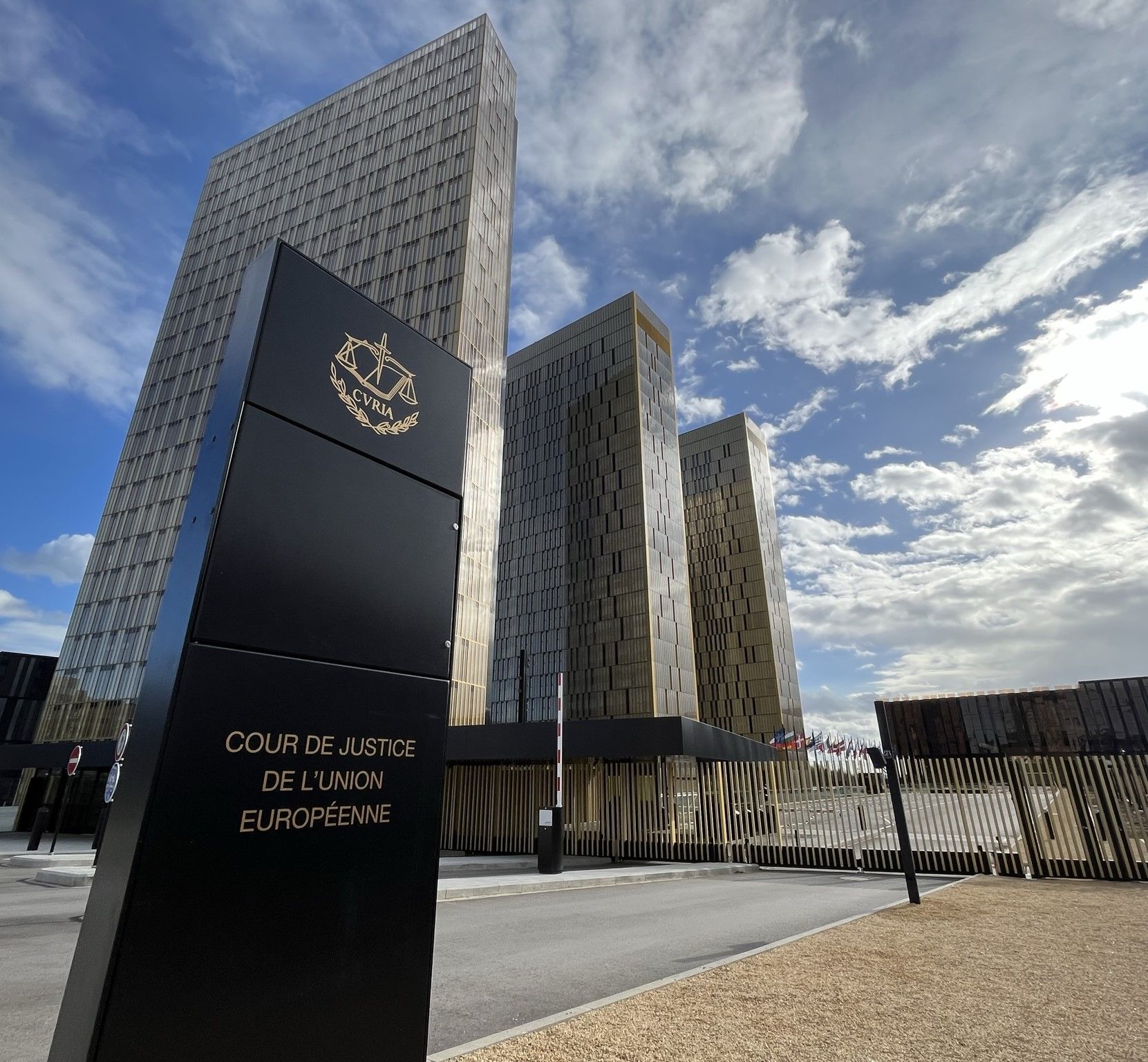
The Court of Justice of the European Union ruled Lufthansa's €6 billion pandemic bailout to be illegal last April.